Why Flux 3 Max Matters for Real-World Visual Intelligence
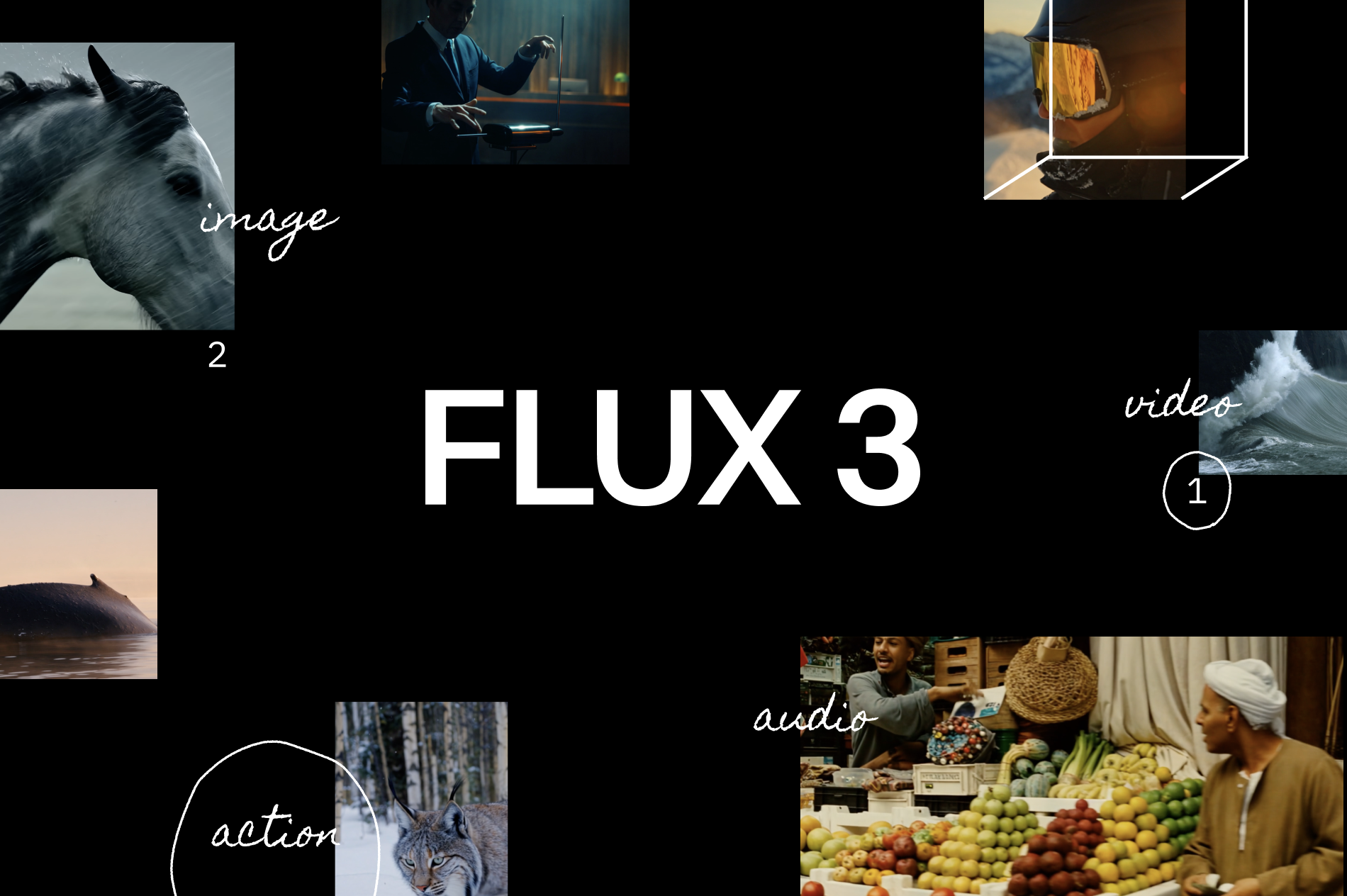
When Black Forest Labs introduced the FLUX 3 model, they made a deliberate bet on unification. Instead of shipping separate systems for image generation, video understanding, and audio synthesis, they built one multimodal foundation model that handles all three. That decision has quietly reshaped what people expect from real-world AI. The version that has been turning heads lately is the largest variant, often called flux 3 max, and it is worth understanding why this scale matters beyond simple benchmark chasing.
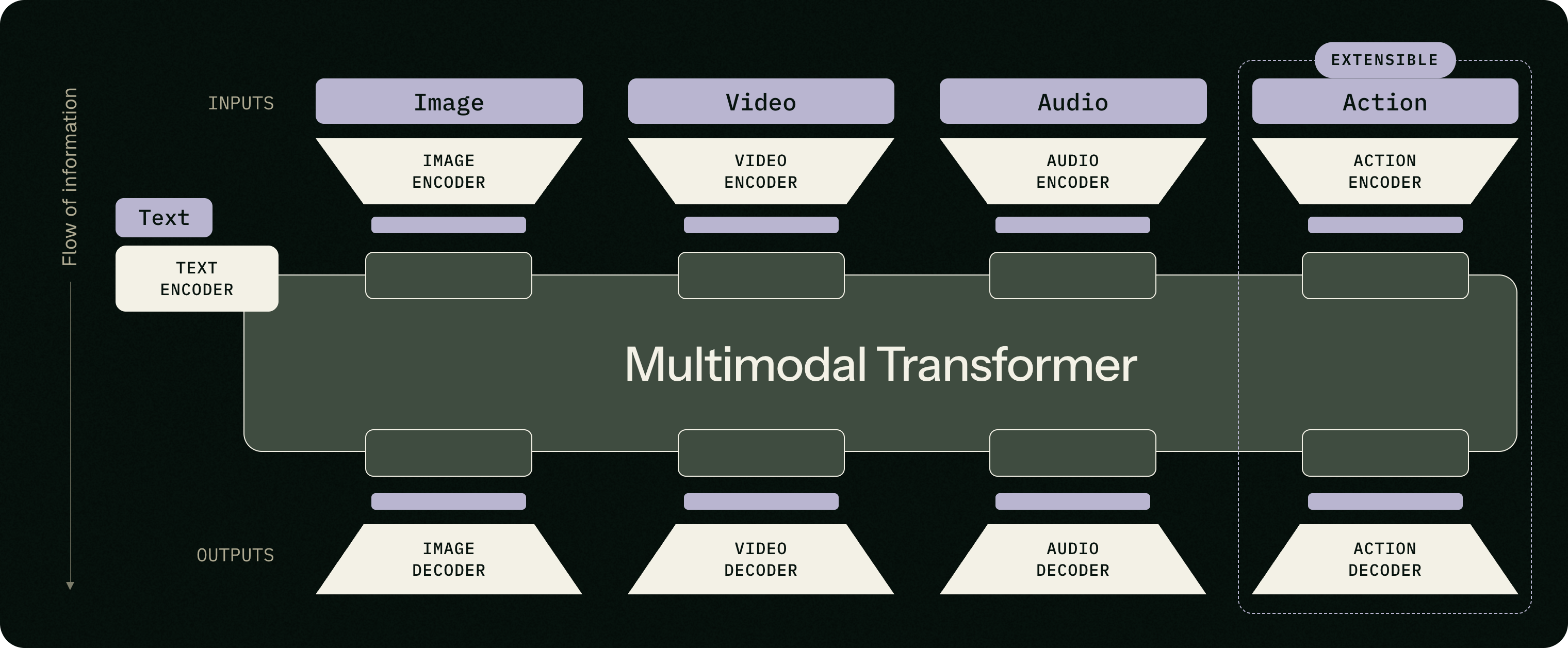
Unified architectures are hard to get right. Most teams treat each modality as a separate problem, stitching together a text-to-image model with a video pipeline and an audio module through late fusion or API calls. The result is brittle. A change in the image component can break the video pipeline, and the model never learns how a scene looks in still frames, moves in video, and sounds in audio all at once. Black Forest Labs took the harder path: they designed a single transformer architecture that processes pixels, waveforms, and text tokens inside the same deep learning framework. The flux 3 max variant is the fullest expression of that design.
What Unified Multimodal AI Actually Changes
To appreciate what flux 3 max brings, it helps to consider an everyday problem in enterprise AI. A media company wants to archive thousands of hours of raw footage, generate captions, produce still thumbnails, and create short promotional clips. A typical workflow would involve a computer vision model for scene detection, a natural language processing model for transcription, a separate text-to-video generator for the promo clips, and an audio synthesis model for background music or voiceover. Each model comes from a different research lab, uses a different input format, and requires its own inference pipeline. Maintenance becomes a full-time job.
With a multimodal foundation model like FLUX 3, that entire pipeline collapses into one API call. The model ingests video directly, understands the visual and audio streams together, produces text descriptions, generates new frames, and synthesises matching audio. The unified architecture means the image generation component knows what the video understanding component just saw, so the thumbnail actually matches the scene. The audio synthesis component knows the emotional tone of the footage, so the generated music fits. This is not a theoretical improvement. It is the kind of integration that saves teams weeks of engineering time per project.

The Role of Scale in Visual Intelligence
Scale alone does not guarantee quality, but in the case of flux 3 max, the parameter count enables behaviours that smaller models simply cannot replicate. Diffusion models have a well-known scaling law: as you increase capacity, the model develops a better grasp of long-range dependencies and rare concepts. A standard FLUX 3 model might generate a perfectly acceptable image of a crowded market. The max variant, with its deeper transformer layers, remembers that the reflection on the puddle should match the sky, that the faces in the background should be consistent across frames, and that the ambient sound should include distant traffic and not just chatter.
This matters most for video understanding and generation. Video is information-dense. A single second at 30 frames per second contains thirty separate images, plus audio, plus temporal relationships between frames. A model that cannot hold all that context in memory will produce flickering, inconsistent output. The flux 3 max variant allocates enough capacity to treat video as a single coherent stream rather than a sequence of independent images. The result is smoother motion, better object tracking, and audio that stays synchronised with the visuals even across scene cuts.
Audio Synthesis That Listens to the Visuals
Audio synthesis is often treated as an afterthought in multimodal AI. Many systems generate a generic soundtrack and call it done. FLUX 3 treats audio as a first-class modality inside the same unified architecture. The flux 3 max model can watch a video of a person walking on gravel, understand the visual texture of the path, and synthesise footsteps that match the pace and surface. It can watch a car chase and generate engine roars that sync with the on-screen acceleration. This is not a simple text-to-audio mapping. The model builds a joint representation of sight and sound, so the audio reflects what is actually happening in the frame.
For enterprise AI applications like automated content production, this removes a huge manual step. Instead of hiring a sound designer to match audio to video, or building a separate pipeline that analyses the video and then triggers audio samples, a single model handles the whole loop. The output is coherent because the model never separates the modalities during processing.
Practical Trade-Offs and Where Flux 3 Max Fits
No model is a universal solution. The flux 3 max variant demands significant computational resources. Running inference on a single high-resolution video clip with full audio synthesis requires a cluster of GPUs or a dedicated cloud instance. For many teams, the standard FLUX 3 model offers a better cost-quality trade-off. The max variant shines in scenarios where quality cannot be compromised: film post-production, high-end advertising, medical imaging analysis where every detail matters, and research that pushes the boundaries of generative AI.
Another trade-off is latency. Because the unified architecture processes all modalities together, batch inference can be slower than running specialised models in parallel. But the output is more consistent, and for most use cases the total time from raw input to finished product is lower because there is no integration overhead. Teams that already have a mature pipeline of separate models may not see an immediate benefit from switching. Teams starting fresh, or rebuilding a legacy system, will find the unified approach much simpler to maintain and extend.
What the Research Lab behind It Brings
Black Forest Labs has a reputation for pushing transformer architecture and diffusion models in directions that serve real deployments, not just papers. Their focus on visual intelligence as a holistic problem rather than a collection of subproblems shows in the design of FLUX 3. The model does not treat text-to-image, text-to-video, and audio synthesis as isolated tasks. It treats them as different views of the same underlying reality. That philosophy makes the flux 3 max variant a useful tool for anyone who needs an AI that understands the world the way humans do, through multiple senses at once.
The research lab has also invested heavily in data quality. A multimodal foundation model is only as good as the alignment between its training data modalities. If the video clips do not have matching audio transcripts, or if the images do not correspond to the text descriptions, the model learns spurious correlations. Black Forest Labs curated datasets where each sample contains all three modalities tightly aligned. That investment pays off in the model's ability to generalise to new combinations of inputs and outputs.
Looking at the Bigger Picture for Enterprise AI
For teams building real-world AI products, the choice between a set of specialised models and a single multimodal foundation model is not academic. It affects development speed, maintenance cost, and the ceiling on what the product can achieve. The flux 3 max variant represents the current high end of what a unified architecture can do. It is not the right tool for every job. But for jobs that require genuine understanding across images, video, and audio, it sets a standard that separate models struggle to match.
The trend in AI research is clearly toward unification. Google's Gemini, Meta's ImageBind, and Black Forest Labs' FLUX 3 all point in the same direction: models that do not just handle multiple modalities but integrate them at the architectural level. The flux 3 max variant is a concrete example of how far that integration can go when you push the scale. It is worth watching how this approach evolves, because the next generation of enterprise AI will likely not be a collection of point solutions. It will be a single model that sees, hears, reads, and generates with equal fluency.